ServicesWater Softener Installation
Water Softener Installation in Wyldwood
First we find out how hard your water really is. When the numbers show scale is a real problem, we size a softener for your home, tie it in with a bypass valve and a safe drain, and clean up when we leave. When they don't, you hear that from us.
How a softener works and who needs one
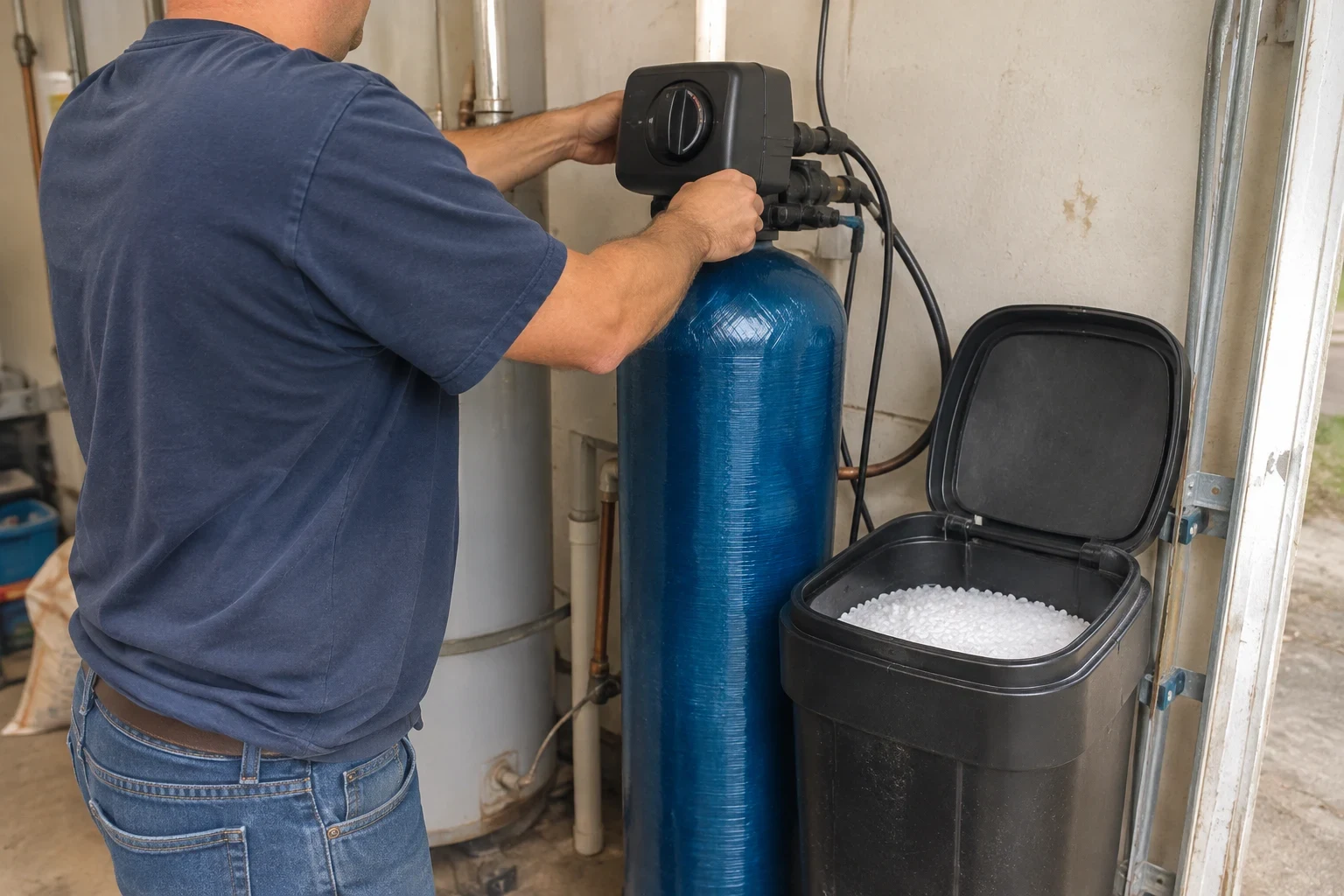
Hard water carries calcium and magnesium. Inside a softener is a tank full of small resin beads. The beads grab those minerals as water flows past and give off a small amount of sodium in their place, or potassium if that is the salt you buy. The minerals are what crust up faucets, spot your glasses and build scale inside a water heater. Once they're gone, soap suds up easier, fixtures stay cleaner and appliances don't fight a mineral coating.
Not every home needs one. Plenty of water around Wyldwood is soft enough to leave alone. So each job begins with a test, and if the results point to a salt-free water conditioner or whole-home filtration instead, that is what we recommend.
Safety guides how we work. We close and drain the line before any pipe gets cut, cover your floors, and set the drain up so dirty water has no path back into your supply.
What comes with every softener install
Testing and right sizing
We check hardness and look for iron, then pick a grain capacity that matches how many people live in your home. An undersized unit cycles over and over and burns salt. An oversized one leaves resin unused, and water can tunnel through it.
A bypass valve
Every softener gets a bypass. You can take the unit out of service with one turn and still have water in the house, which keeps future repairs safe and quick.
Air-gapped drain
The drain for regeneration water runs to a real air gap or an approved fitting. That way brine and waste can't get pulled back into the water you drink.
Brine tank set right
The brine tank sits on solid, level ground. We put in the first bags of salt and run an overflow line, so a float that sticks won't put water on your floor.
Settings and a quick lesson
We program regeneration around your water and how much you use. Then we show you where salt goes, how the bypass works and what the display is telling you.
Leak check and haul-away
Pressure comes up slowly while we watch each joint, and we run a complete cycle. Scraps, boxes and old fittings go out in our truck.
Signs hard water is getting into your home
- White crust on fixtures
- Chalky buildup around faucets, showerheads and drains that comes back soon after cleaning is mineral scale.
- Spotty dishes and glasses
- Cloudy film on glassware after a full dishwasher cycle often means hard water, not a bad detergent.
- Water heater noise
- Popping or rumbling from the tank can be scale settling on the bottom. That layer makes the heater work harder.
- Soap that won't lather
- Shampoo and soap that feel like they never rinse off, or leave skin dry and tight, are common with hard water.
- Low flow at fixtures
- Scale can narrow aerators and showerhead holes over time. If cleaning them helps for a while, minerals are the likely cause.
What happens on install day
- 1
Run the test, share the numbers
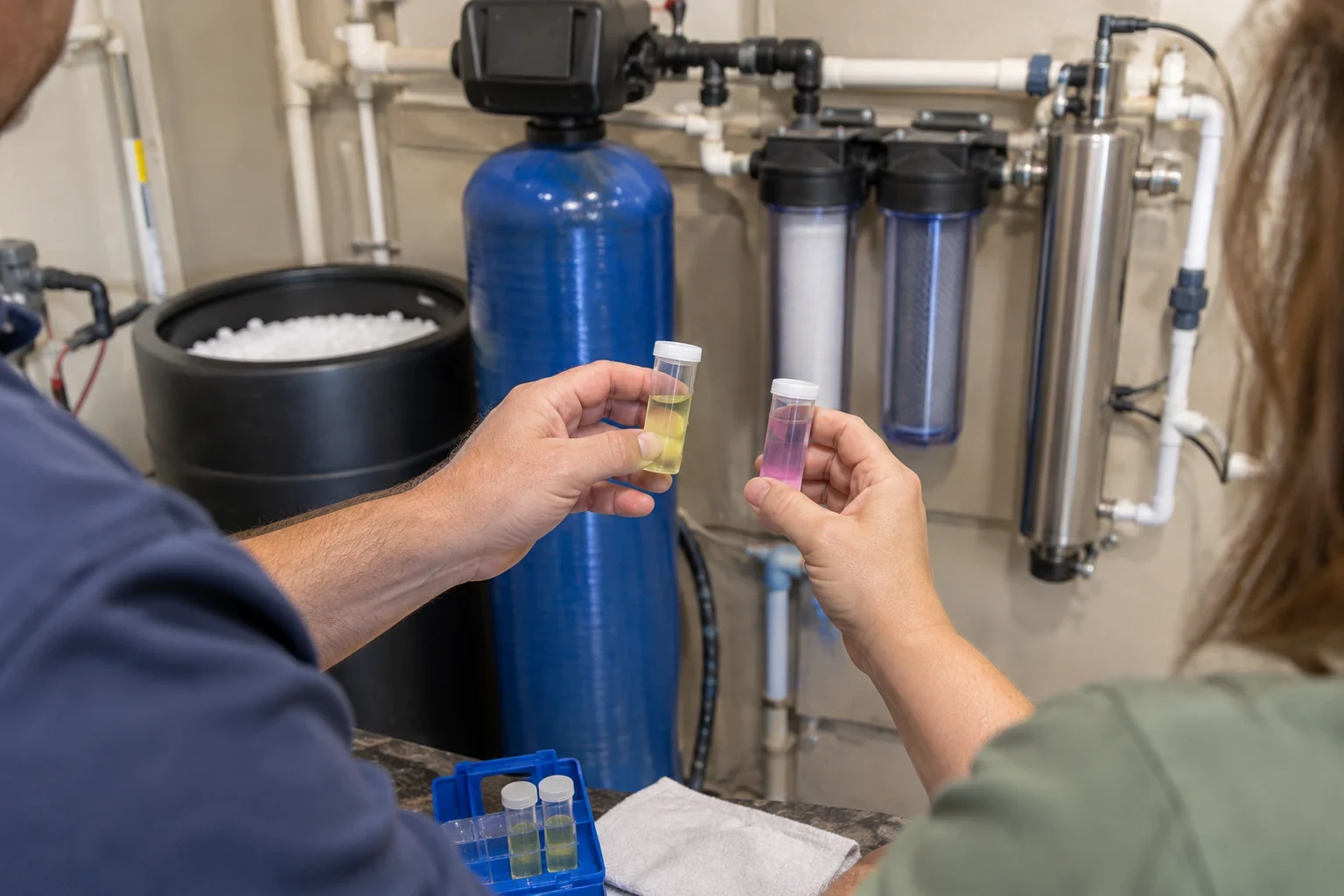
We test a sample from your tap and walk you through what it shows. If the results say a softener is the wrong fit, you hear that and what we'd do instead.
- 2
Choose a spot, protect the floor
The softener needs to be close to the main line, a drain and an outlet, so a garage or utility room is common. Drop cloths go down first.
- 3
Water off, unit in
We close the main, drain the pipe and fit the softener and bypass valve. Then we run the drain line and set the air gap.
- 4
Bring water back slowly
We open the water a little at a time so air bleeds out and the pipes don't bang. Then we look for drips, add salt and start the first regeneration.
- 5
Retest and hand off
A second test on the softened water shows you the difference. We finish by going over the controls and the simple upkeep.
What sets the cost of a softener
Installation is free, so your quote mostly reflects the softener itself and any extra parts the job calls for. You get the whole figure, line by line, by phone or at the water test before we touch a pipe. Nothing new shows up on the bill later.
- Grain load in your home
- Two things set how much work the unit does each day: how hard your water tests and how many people shower, cook and run laundry in your home. A heavy load calls for a bigger resin tank and a sturdier control valve.
- Location of the main line
- An open spot with the main, a drain and an outlet close together is the easy case. If the softener has to go in a cramped closet or far from the main, it takes more pipe and fittings.
- Old equipment in the way
- Sometimes a tired softener or filter is still plumbed in. We pull it out and take it away, which can mean a few more parts to tie the new unit in.
- Iron showing up in the test
- Iron coats softener resin and shortens its life. If your results show it, you may need iron and sulfur removal installed before the softener to protect it.
Softener questions we hear most
- How do I know if my home needs a softener?
- Your test results decide it. Some water is only a little hard, and a salt-free water conditioner or nothing at all handles it fine. We show you the hardness number and tell you straight which way it points.
- Is there a warranty on the softener?
- We back the systems we install with a lifetime warranty on tanks and ceramic discs, 5 years on the control valve, circuit board and filter media, and 1 year on labor. We go over which parts apply when we give you the quote.
- Can my family drink softened water?
- Most people drink it with no trouble. The softener does add a little sodium. If that matters to you, run potassium chloride in the brine tank, or put a reverse osmosis system under the kitchen sink for drinking and cooking water.
- What upkeep does a softener need?
- Salt is the main chore. Most homes add more to the brine tank every few weeks. Once in a while, check for a hard crust of salt sitting across the top, called a bridge. We show you how to spot one and break it up so regeneration doesn't stall.
- How long will my water be shut off?
- Not long. The main is closed only for the part where we cut the pipe and fit the softener and bypass. After those joints are made, we bring the water back slowly, and you can use your taps while we program the unit and finish up.
Find out if a softener is right for you
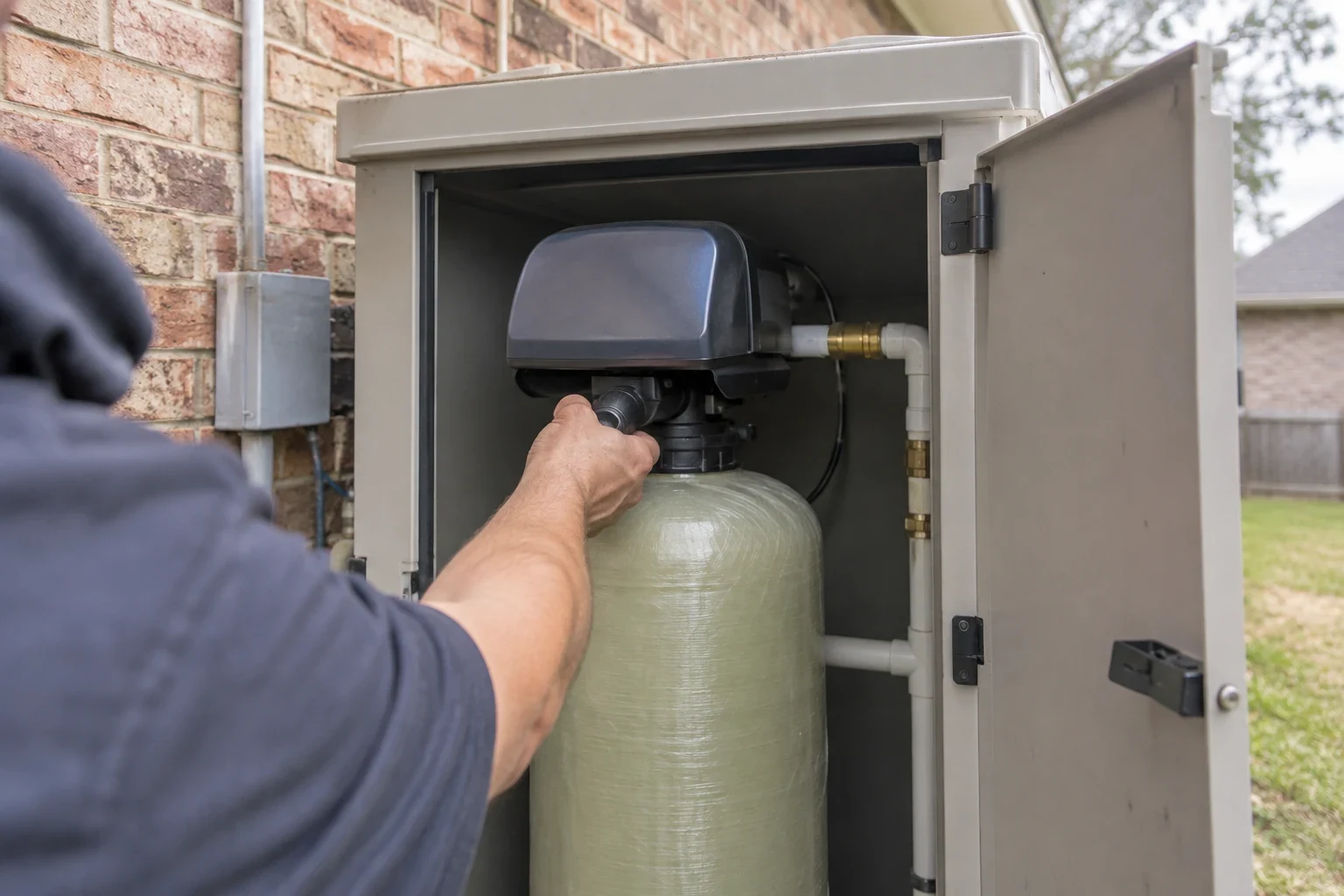
Start with a free water test. We'll show you the hardness numbers and give you a straight answer before anything goes in.