ServicesReverse Osmosis Systems
Reverse Osmosis Systems in Wyldwood
We install under-sink reverse osmosis systems that give your home cleaner water for drinking and cooking. We test your water first, close the shutoff before we loosen a single fitting, and leak-check everything before we leave. Installation is free.
What an RO system does and when it makes sense
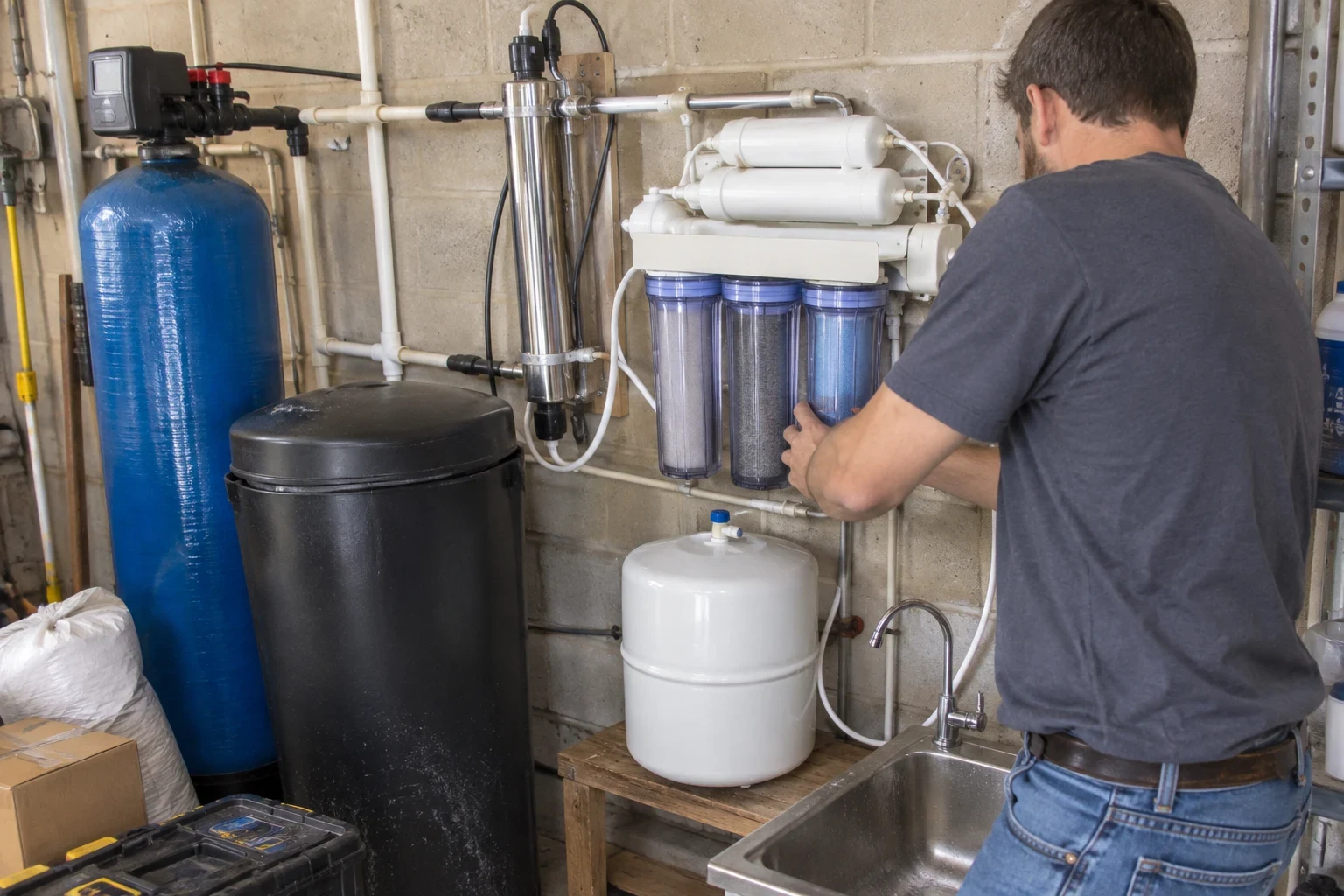
A reverse osmosis system sits under your kitchen sink and feeds its own small faucet. Water passes through a sediment filter, a carbon filter and a very tight membrane, then into a small storage tank. It cuts chlorine taste, dissolved solids and metals like lead that can come from old pipes and solder.
RO is meant for the water you drink and cook with. Showers, laundry and the rest of the house are a different job. If every tap in your home tastes or smells of chlorine, start with whole-home filtration. Plenty of homes end up with both.
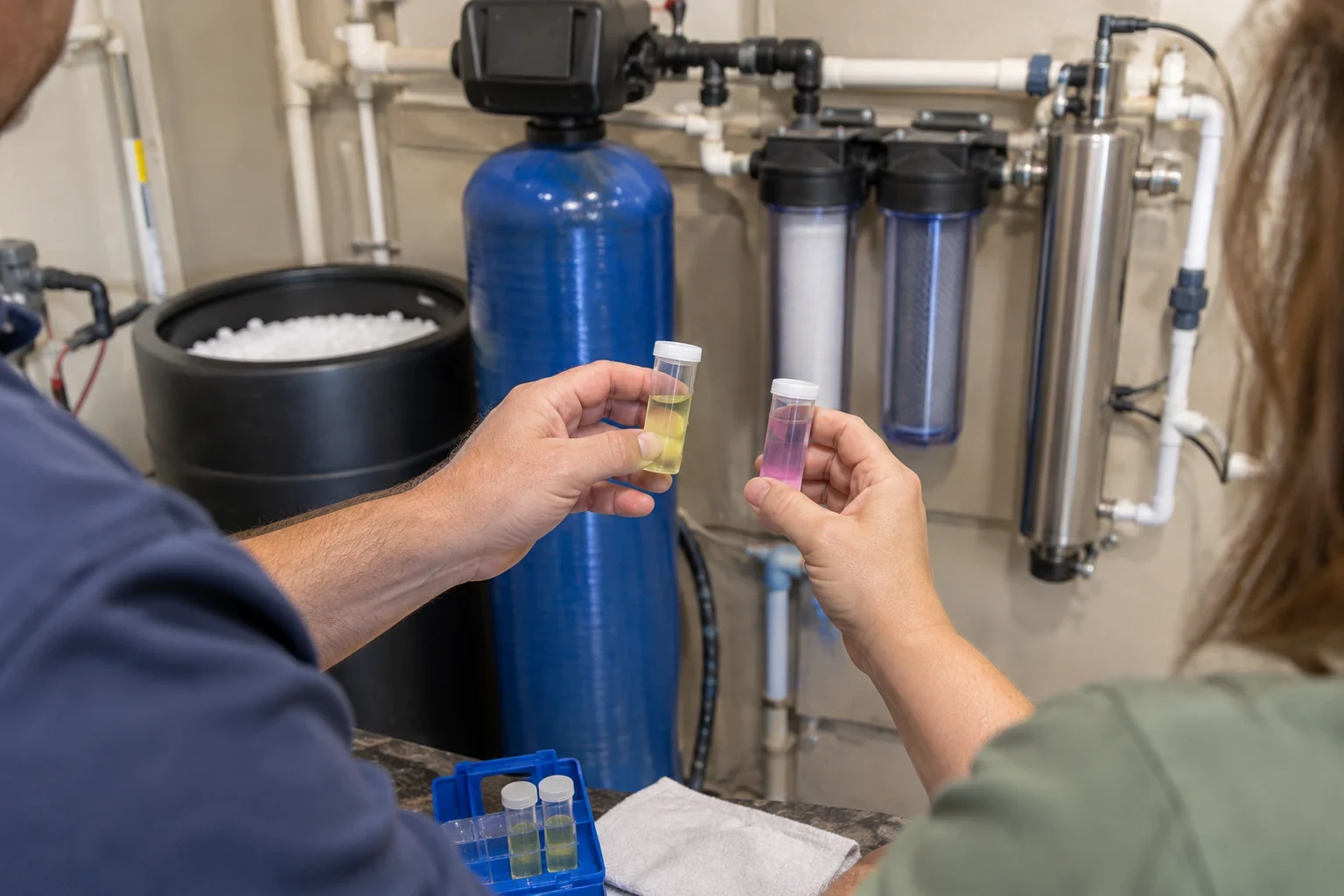
We don't guess. A free water test shows what is really coming out of your tap, so you only pay for something that fixes a real problem.
What's included in an RO install
- A free water test first
- We check your tap water for dissolved solids, hardness and chlorine. You see the numbers with us at the sink.
- Lead-free fittings and food-grade tubing
- Every part that touches your drinking water is rated for it. We don't reuse old fittings we find under the sink.
- A proper drain connection
- The waste line ties into your sink drain with a drain saddle placed above the trap, or runs through an air gap faucet. Either way, dirty drain water can't back up into the system.
- Shutoff valve check
- We test the cold-water shutoff under your sink before we tap into it. If it's seized or weeping, we tell you before any work starts.
- Sanitizing and first flush
- We sanitize the housings and send the first full tank to the drain. Carbon dust and membrane preservative go down the drain, not into your glass.
- Leak check and walkthrough
- We dry every joint, pressurize the system and check again once the tank fills. Then we show you how to shut it off and when filters are due.
Signs an RO system is worth a look
Your drinking water tastes like a pool
Cities add chlorine so water stays clean in the pipes. A lot of people just don't like how it tastes in a glass. Carbon plus an RO membrane takes it out of the water you drink.
Your home has older plumbing
Lead solder was used to join copper water lines until it was banned in 1986, so older houses may still have it. Few under-sink systems reduce lead, and RO is one of them.
You haul cases of bottled water home
If bottled water is on every grocery list, an RO faucet usually does the same job right at the sink.
White film on the kettle and coffee maker
That film is dissolved minerals, and RO pulls most of them out of drinking water. Test first, though. Sometimes a salt-free water conditioner or a softener is the better fix.
Someone at home needs extra care
Mixing baby formula, or caring for a family member whose doctor suggested filtered water, are common reasons. An RO faucet adds one more barrier for the water they drink.
What moves the price of an RO system
Installation is free, so what you pay comes down to the system and the filters it needs over the years. We give you your quote by phone or at your free water test, with every part written out. Here is what changes the number.
Number of stages
Every stage you add raises the price. We install two options: a lower-price 5-stage tank RO under the sink (sediment, GAC, carbon block, RO membrane, post carbon) and a tankless RO (800 gallons per day, 7 stages, 0.0001 micron); adding a remineralizing cartridge or a UV lamp costs more. Your test results show which extras actually earn their place.
Tank size and pump
A big family may want a larger storage tank. If your water pressure runs low, a booster pump helps the membrane do its job.
Faucet and drain setup
An air gap faucet, a granite or quartz countertop, or a tight cabinet can change the parts we bring.
Extra lines
Sending filtered water to your fridge or ice maker means more tubing and another fitting.
Filters over time
Plan on new pre-filters about once a year and a new membrane every few years. Your water decides the exact schedule.
How the install day goes
- 1
Test and talk
We test your water at the kitchen tap and go over the results with you. If RO isn't the right fix, we say so plainly.
- 2
Protect the cabinet
We clear the sink cabinet, lay down a mat and towels, and close the cold-water shutoff. We open the faucet to bleed off pressure before loosening anything.
- 3
Mount and connect
We drill one clean hole for the RO faucet or use the existing sprayer hole. The filter unit and tank go where you can reach them for filter changes.
- 4
Flush and leak check
We sanitize, fill the tank, flush it and check every joint with a dry paper towel. Then we fill it again and check a second time.
- 5
Show you the basics
You learn where the system's own shutoff is, what a slow drip looks like, and when the filters and membrane are due.
Reverse osmosis questions we hear
Does an RO system waste water?
Some, yes. The membrane rinses the minerals it rejects into the drain. That only happens while the storage tank is refilling, and it stops once the tank is full. Current models also send far less to the drain than the old ones did.
Will RO take the minerals out of my water?
Most of them. That is how it pulls out lead and dissolved solids. Some people like the clean taste. Others want a remineralizing stage that puts a little calcium and magnesium back, and we can set it up that way.
How do you keep my cabinet and floor safe from leaks?
We test your shutoff valve before anything else, use new lead-free fittings and check every joint before and after the tank fills. Before we head out, we show you how to close the system's own valve if you ever spot a drip.
What warranty comes with an RO system?
We back the systems we install with a lifetime warranty on tanks and ceramic discs, 5 years on the control valve, circuit board and filter media, and 1 year on labor. We go over which parts apply when we give you the quote.
My city water passes its tests. Why would I add RO?
You may not need it. City water is treated to be safe at the plant. RO deals with what can change after that, like old pipes in your home, chlorine taste, and wanting another barrier for what you drink. A free water test tells you if it is worth the money.
Do you install RO outside Wyldwood?
Yes. We also work in nearby towns like Bastrop, Cedar Creek, Manor and Elgin.
Find out what's in your tap water
We'll test your water for free and tell you straight whether RO makes sense for your home. If it does, installation is free too.